Translation
Eastern Armenian to English
In Progress
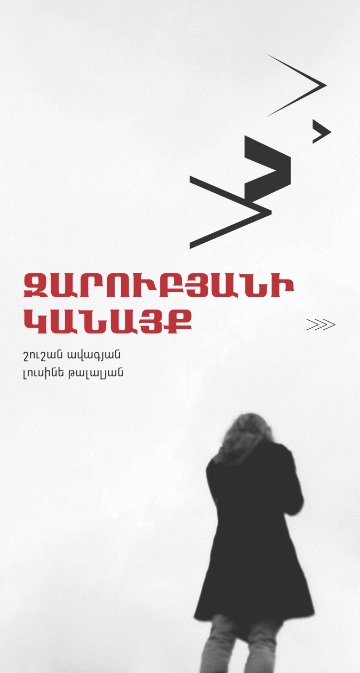
cover image
“The Women of Zarubyan Street is composed entirely of citations—direct and indirect—which recount events that have taken place
— Shushan Avagyan & lucine talalyan, “By way of Introduction,” the Women of zarubyan street
either in reality or in the imagination. I have simply placed and arranged them in a unique and precise way.” —SA
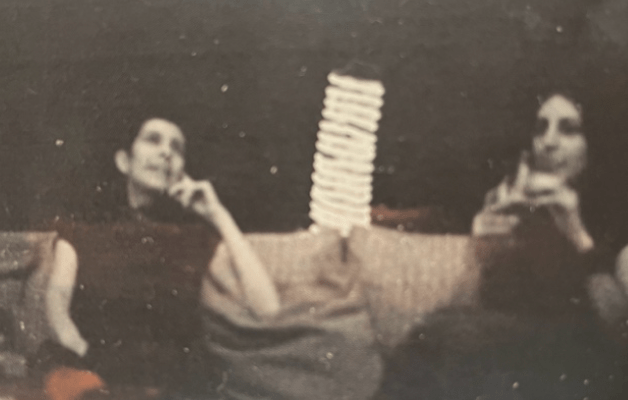
“This is the story of a photograph, which, over the years, had become invisible. Filtering through the photograph pierced the
patterns of the wallpaper.” —LT
Read the Review!
Nirvana Tanoukhi in The Hopkins Review
The Women of Zarubyan Street
by Shushan Avagyan and lucine talalyan
Winner of the third annual Anne Frydman Translation Prize of the The Hopkins Review.
Read the full excerpt in THR here.
(Զարուբյանի Կանայք/Zarubyani kanayq, Yerevan: samizdat, 2014)
Descending upon you like Duchamp’s 1912 painting “Nude Descending a Staircase, No. 2,” Zarubyani kanayq represents the mastery of Avagyan’s language play, expanding beyond text to image with talalyan’s blurred photographs on the Soviet Praktica LTL 3 photo camera. This style of writing—non-linear and intertextually fragmented—is new in Eastern Armenian language literature. Yet no contemporary Armenian novel has attempted this multi-perspective experience of form between text and image, making Zarubyani kanayq an innovative novel in the contemporary Armenian literary landscape.
Excerpt from the Prologue
When the streets are renamed and their names are changed from one name to another, when on some random day in some ministry, some deputy minister signs some document, and in some other office—most likely on the second or third floor of the municipality building—some other (anonymous) secretary seals the document with their blue stamp on which one simple instruction is written in printed letters, composed of words so simple that [truly] nothing revolutionary can ever be rendered from them; a stamp bearing a simple message: such-and-such street is renamed Zarubyan, and on a random November day the street, which for almost seventy years bore another name, is suddenly renamed not Apcar, Shahinyan, Yesayan, Kurghinian, Dussap or any other name, but Zarubyan; renamed in a matter of just one day, a day when, according to habit, the trees that grow on its sidewalks change colors and some of them, having already lost their leaves, uncover the street sign so that suddenly one day someone in the neighborhood notices that the (rusty white) street sign hidden behind the leaves no more bears its familiar name, and instead of Plekhanov there’s another name, also composed of eight letters—eight simple letters that together make up someone else’s name. From here, questions arise.
ad
asdf
ad
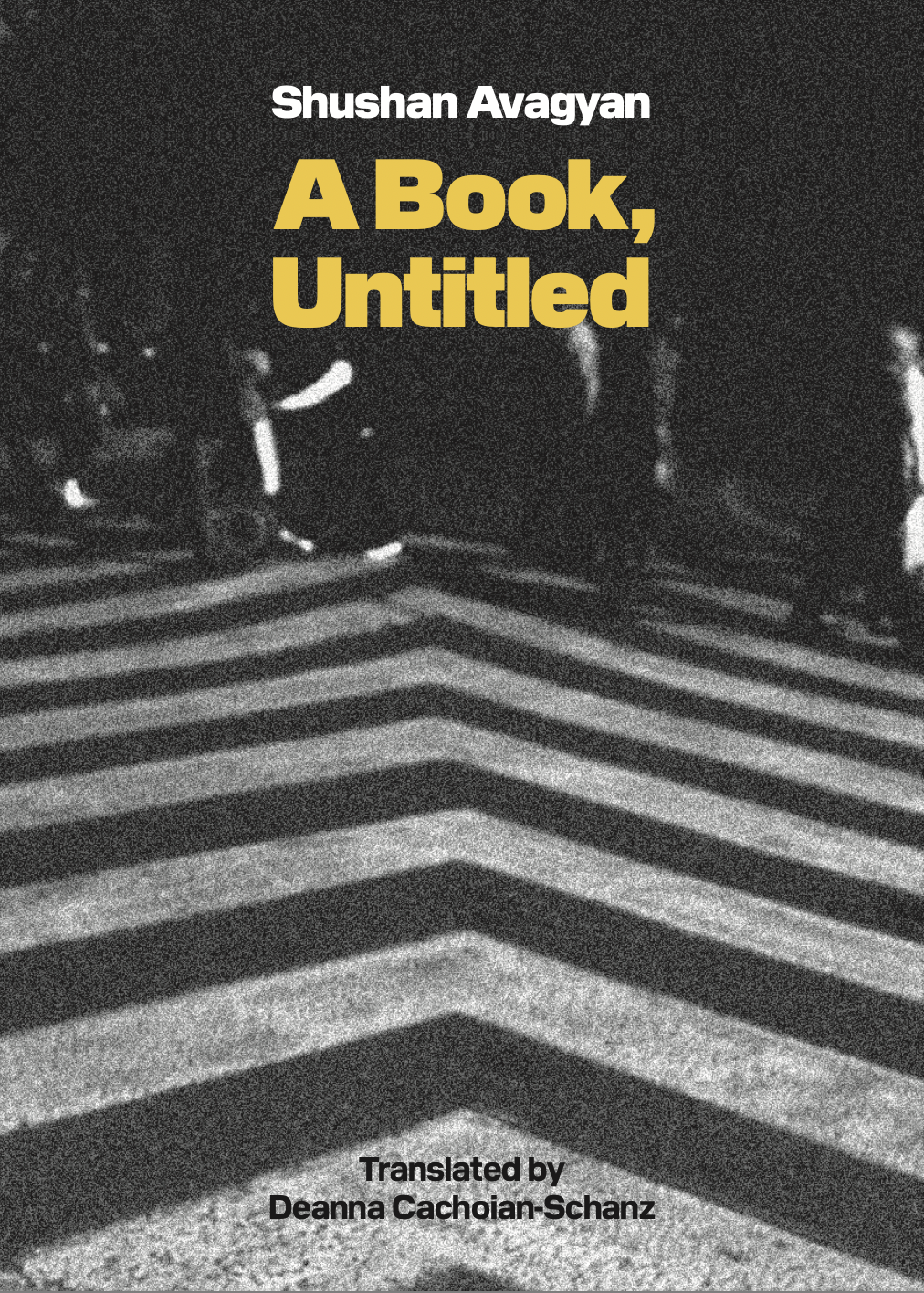
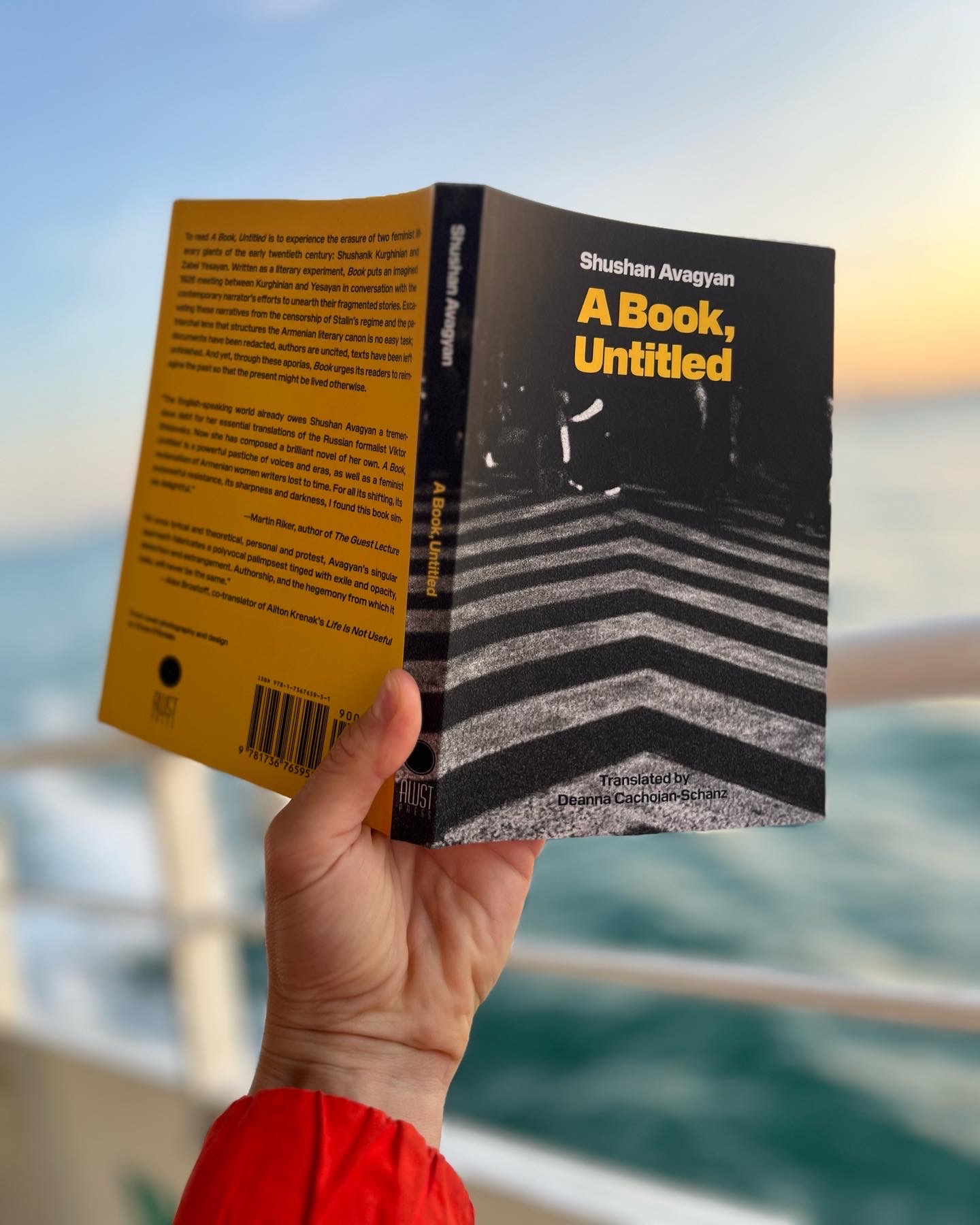
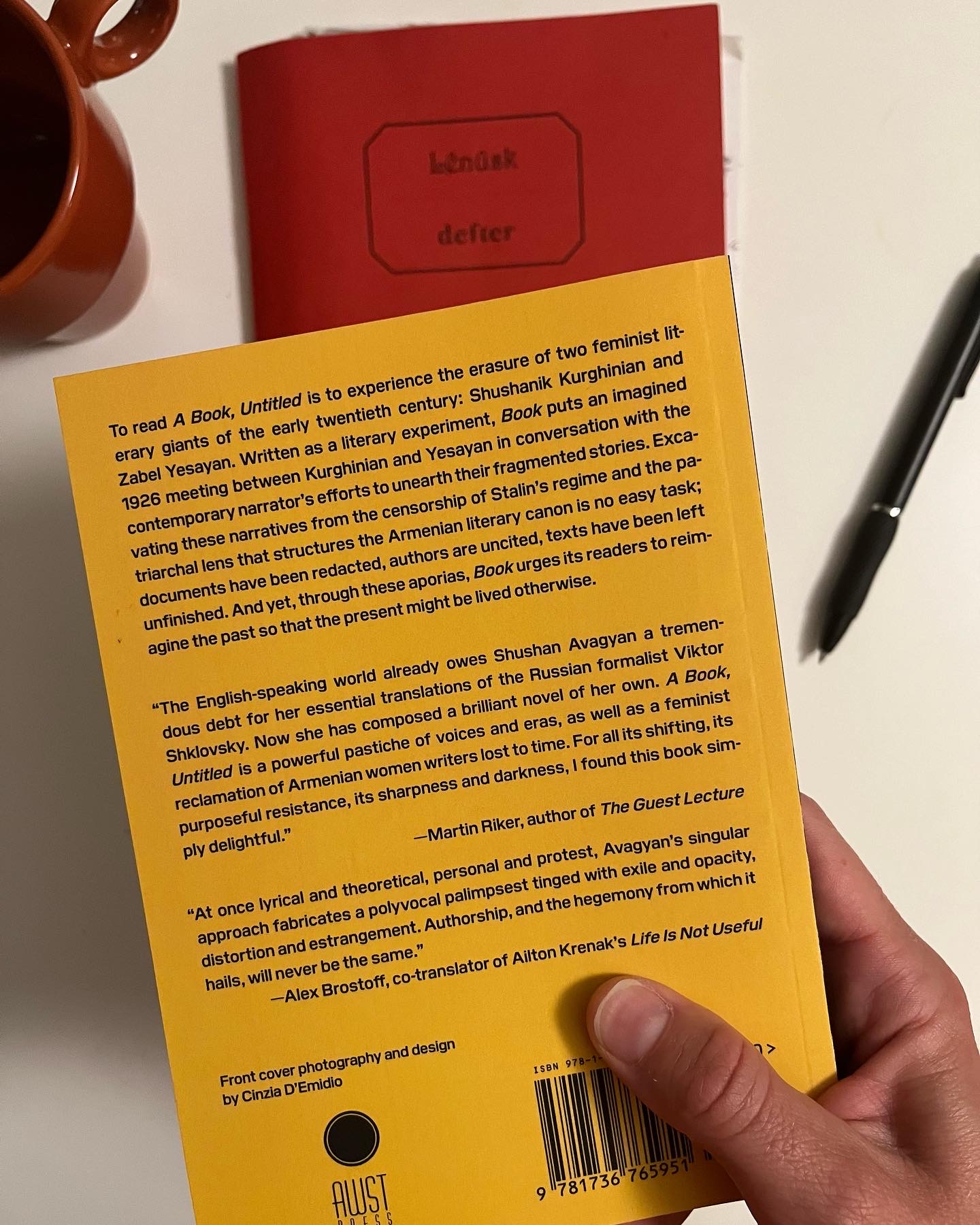

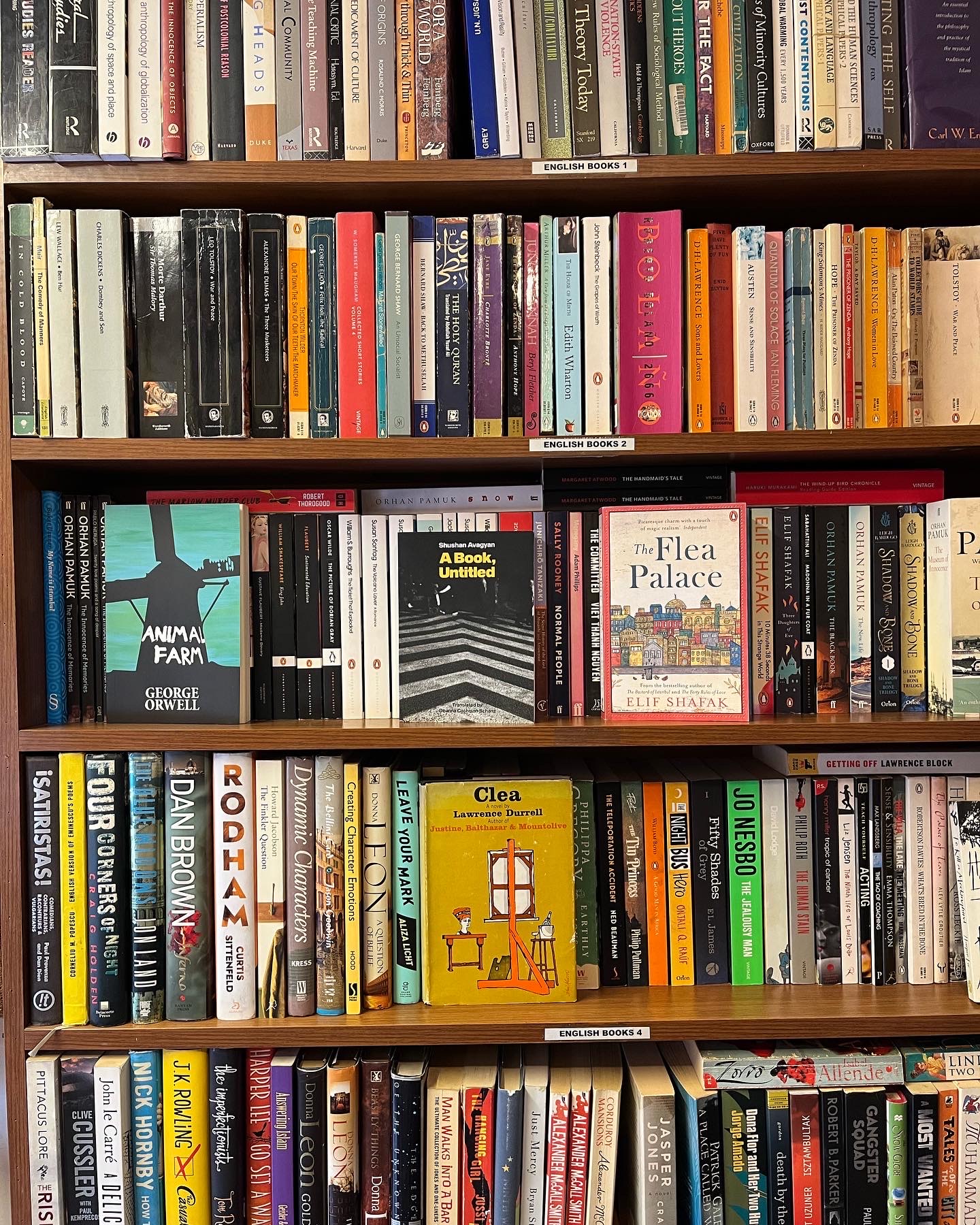
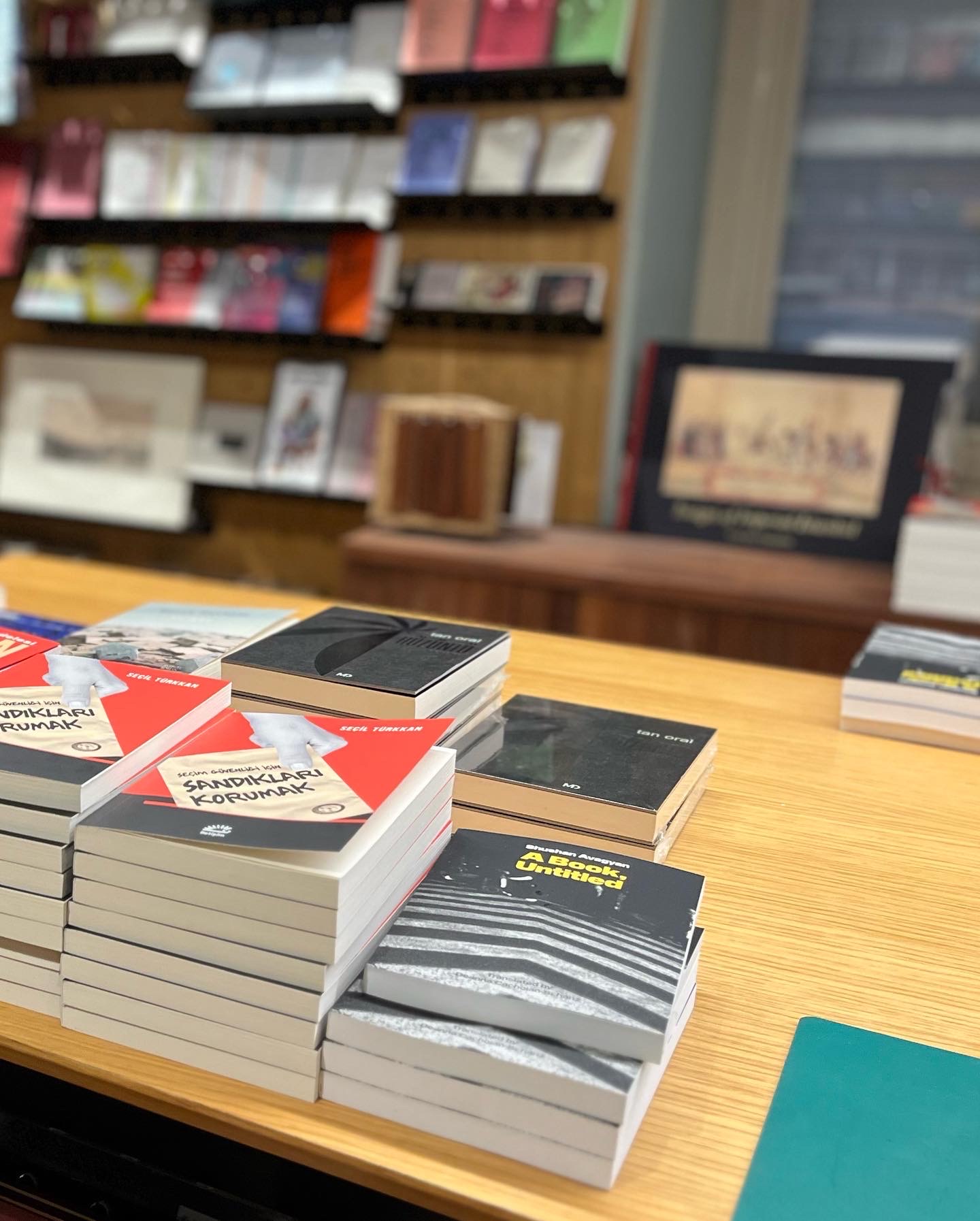
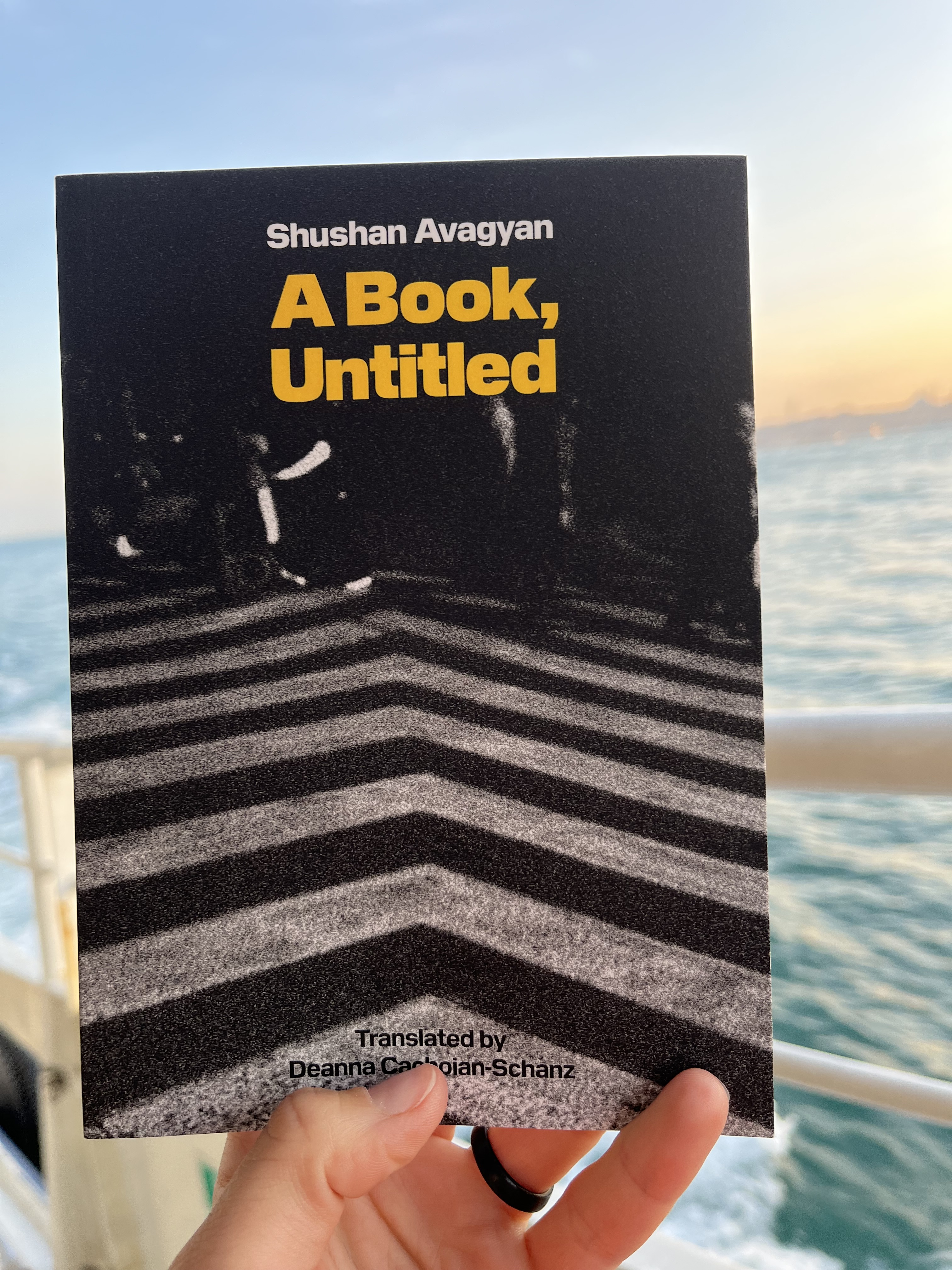
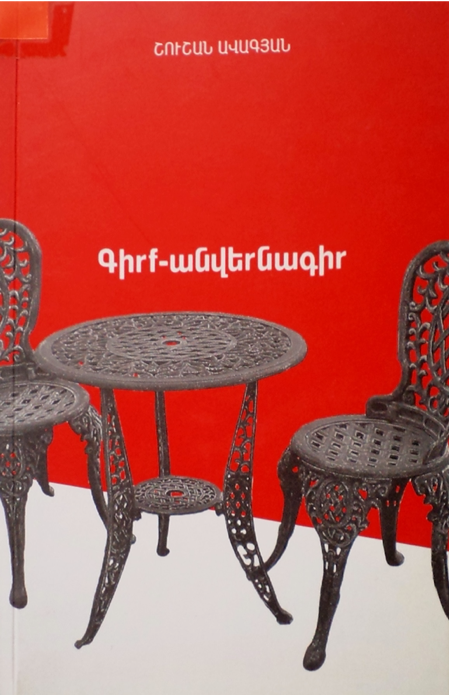
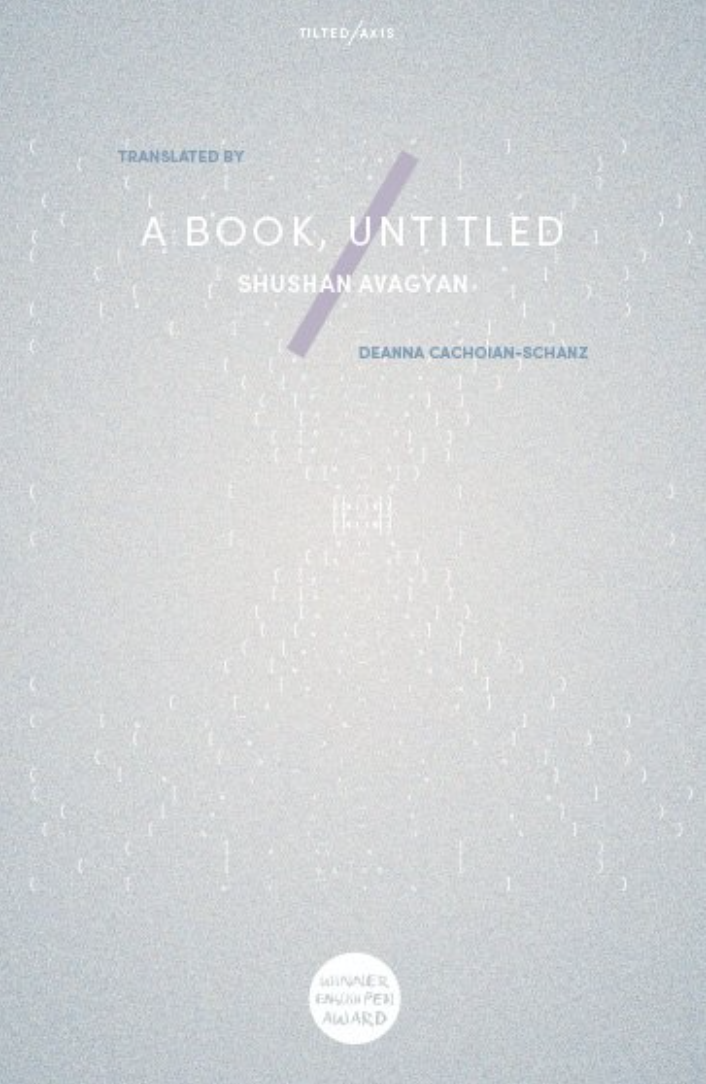
Front cover for AWST Press edition by Cinzia D’Emidio and by Amandine Forest for Tilted Axis Press
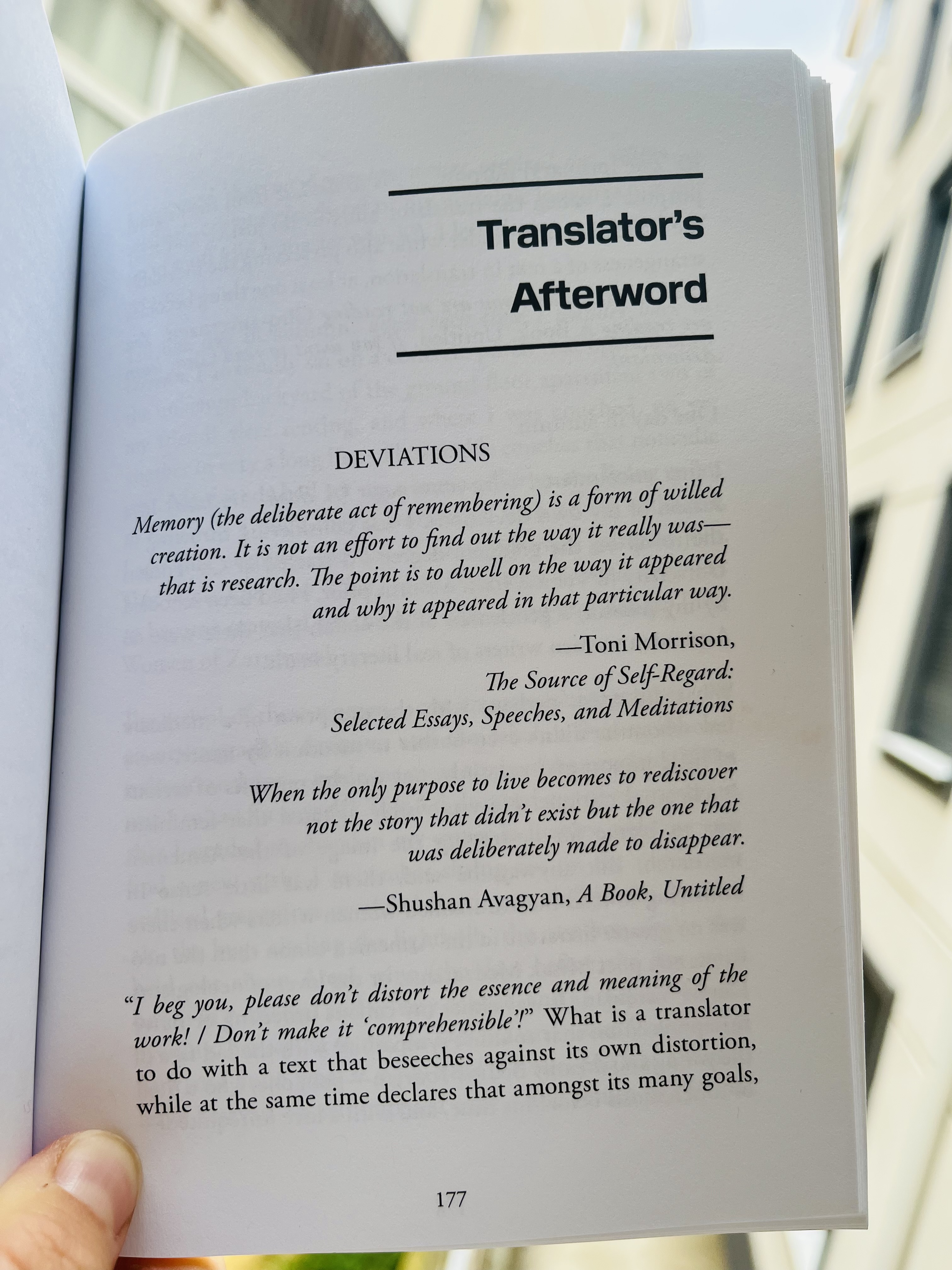
“When the only purpose of life becomes to rediscover not the story that didn’t exist but the one that was deliberately made to disappear.”
—Shushan avagyan,
A Book, untitled
Order in N. America with AWST (March 2023) & with Tilted Axis Press in the UK & world (December 2023)!
Tilted Axis Press — Book Launch with Catherine Wilson Garry
Read the Reviews!
Society of Authors, TA First Translation Prize Judges
Gesche Ipsen, 2024 TA First Prize Judge, The Society of Authors
Alistair Ian Blyth in Big Other
Lisa Gulesserian in The Armenian Weekly
Arpi Sarafian in Mirror-Spectator
Tobias Carroll’s “The Watchlist” in Words Without Borders
Xiao Yue Shan’s Interview with the Translator in Asymptote
Helen Vassallo in Wasafiri 120
A Book, Untitled

by Shushan Avagyan
Winner of:
2024 Modernist Studies Association’s (MSA) Translation Book Prize
2024 Dr. Sona Aronian Armenian Studies Book Prize for a Work in Translation
and
The Society of Authors’ TA First Translation Prize
(Գիրք-անվերնագիր/Girq-anvernagir, Yerevan: samizdat, 2006)
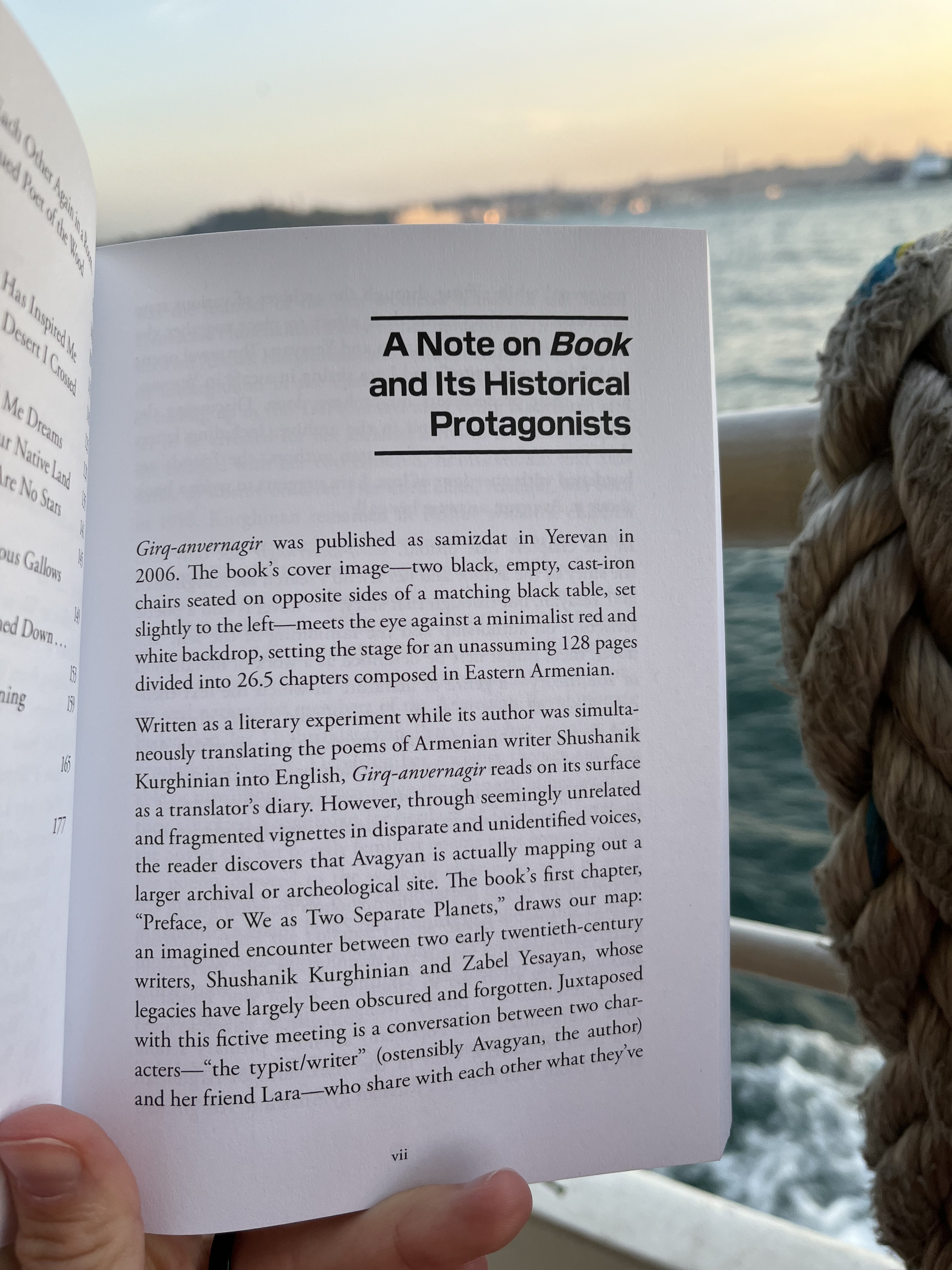
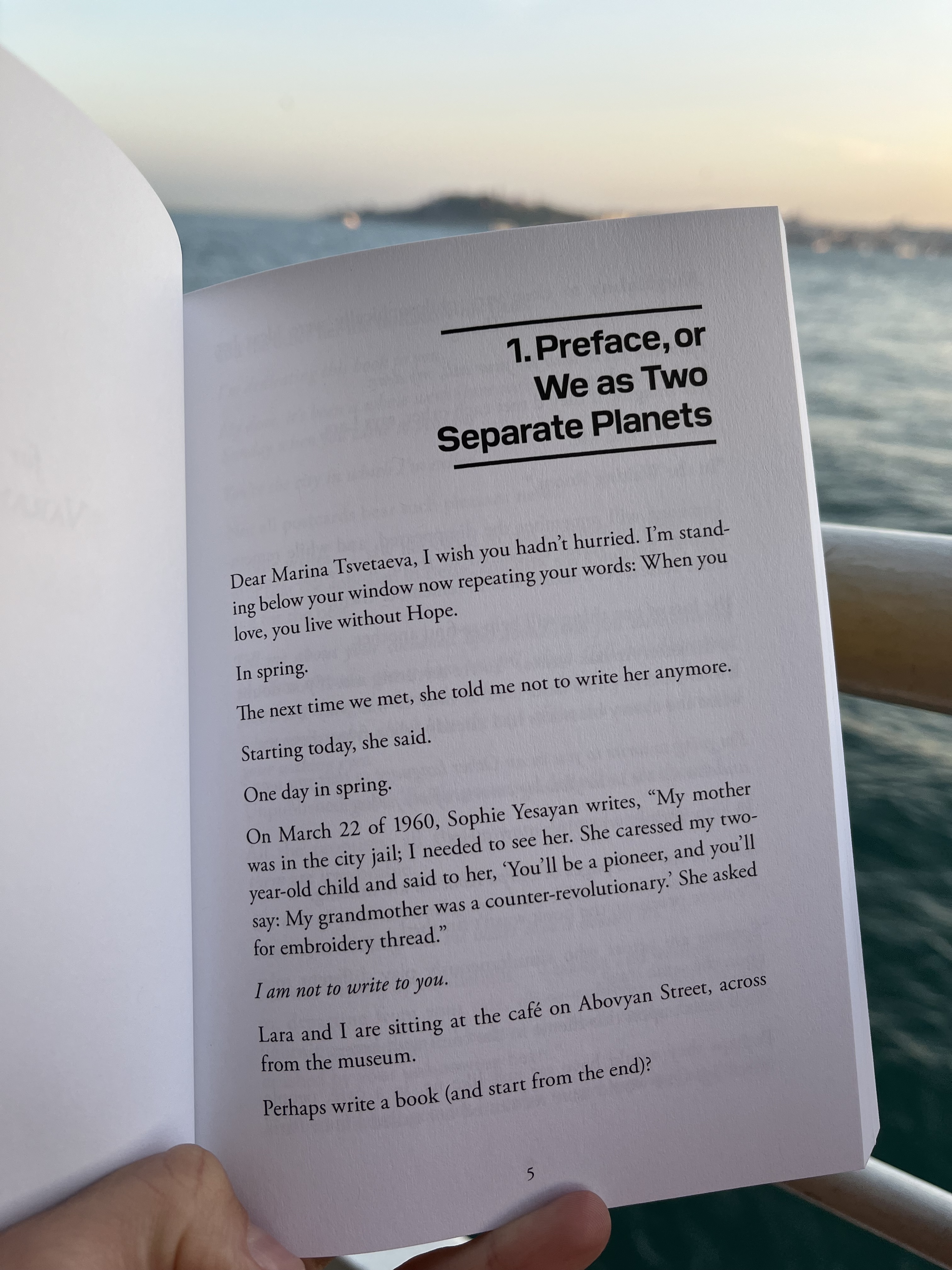
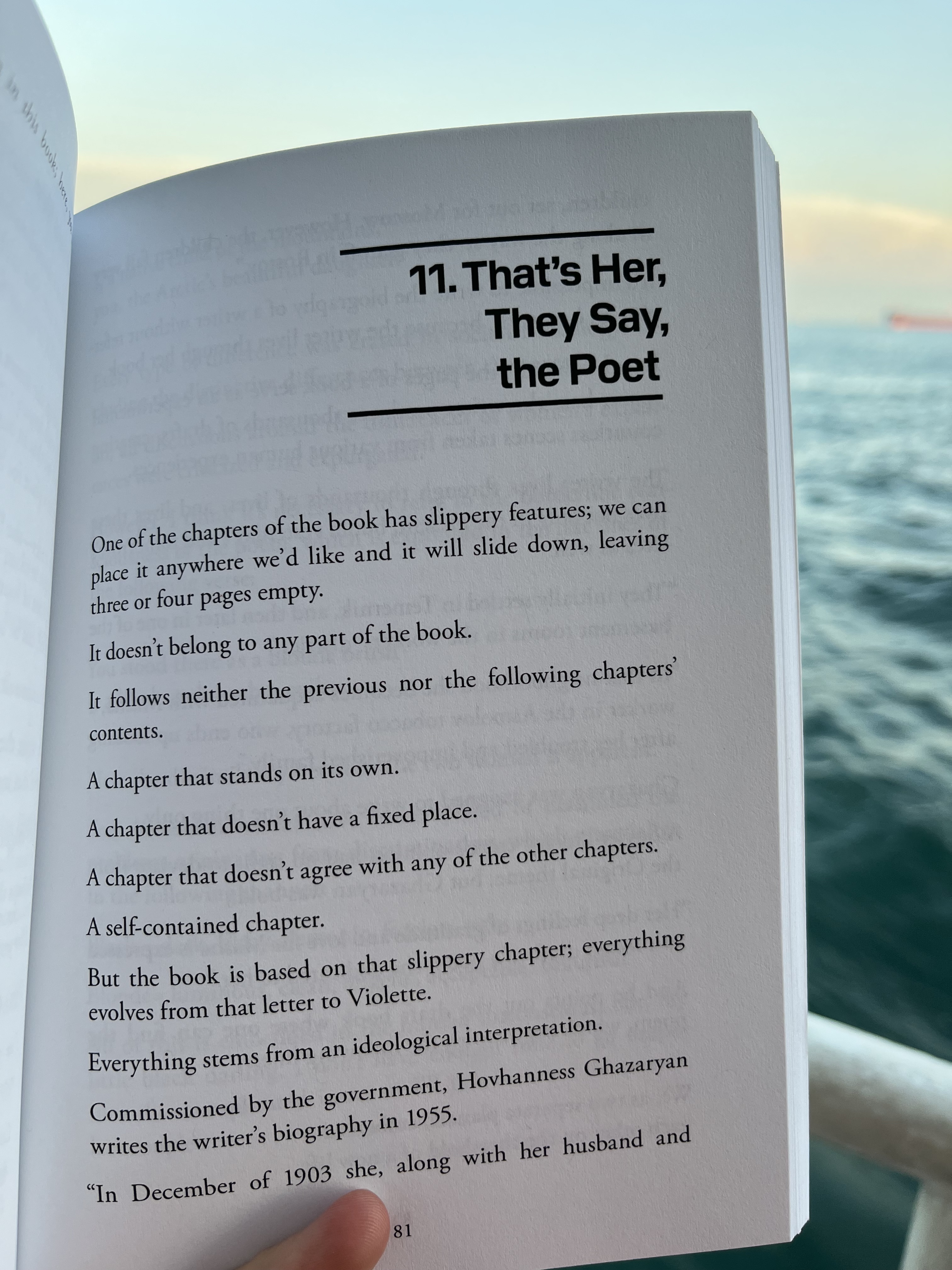
A Book, Untitled, the first of contemporary Armenian author Shushan Avagyan’s two novels, was written as a literary experiment and published in Yerevan as samizdat in 2006. Over 26.5 chapters of seemingly unrelated vignettes and genres in disparate and unidentified voices, the reader discovers that Avagyan, while writing the novel as a translator’s diary, is also mapping out a larger archival or archeological site: an imagined encounter between two early twentieth-century feminist writers, Shushanik Kurghinian and Zabel Yesayan, whose legacies have largely been obscured and forgotten as a result of the Tsar’s and then Stalin’s regime, and the patriarchal, nationalist rendering of the Armenian literary and historical canons. Kurghinian’s and Yesayan’s imagined encounter in 1926 is juxtaposed with a conversation in the present day between the novel’s unnamed narrator—an archivist and translator referred to as the “typist/writer”—and her friend Lara. Both women are piecing together the forgotten writers’ fragmented stories. The lines that separate the narrative plots, past, present, and imagined, are blurred. Each chapter brings readers a new (part of the) story. There are multiple points of view, yet who, in any given moment, is speaking? Genres overlap: poetry, prose, epistolary, a math equation. Words are censored with blank spaces, authors uncited, text missing or italicized as if still in draft form, and wordplay—or wordwork—abounds. This play conveys a story of loss through vivid poetic verses that invitingly coo to its readers. As a speculative engagement with historical documents and their absences—a praxis similar to what Saidiya Hartman calls “critical fabulation”—A Book, Untitled is a story about the traumatic inner-workings of cultural, governmental, and (hetero)patriarchal censorship. In sitting with this story, perhaps readers may better understand how losing these writers’ lost legacies in the past has urgent stakes in our present. In piecing together this story, the reader discovers that new continuities are possible to be made for our future.
Read the Translator’s Afterword in the texts section of this site!
Praise for Book
“Fragments whirl, voices resound, a history unravels: Shushan Avagyan’s A Book, Untitled, translated by Deanna Cachoian-Schanz, echoes the text’s own articulation of a work “Re-cognized. Re-solved. Re-membered.” Avagyan’s intertextual imaginary unearths an archive of two Armenian feminist writers and activists, performing the “wordwork” that severs censorship and binds citation to fabulation. As lyrical as it is theoretical, and as personal as it is protest, this singular approach to autotheory through the lens of translation cracks open the contours of Armenian literature and history. What results is a polyvocal palimpsest tinged with exile and opacity, distortion and estrangement. Authorship, and the hegemony from which it hails, will never be the same.”
—Alex Brostoff, co-translator of Ailton Krenak’s Life Is Not Useful
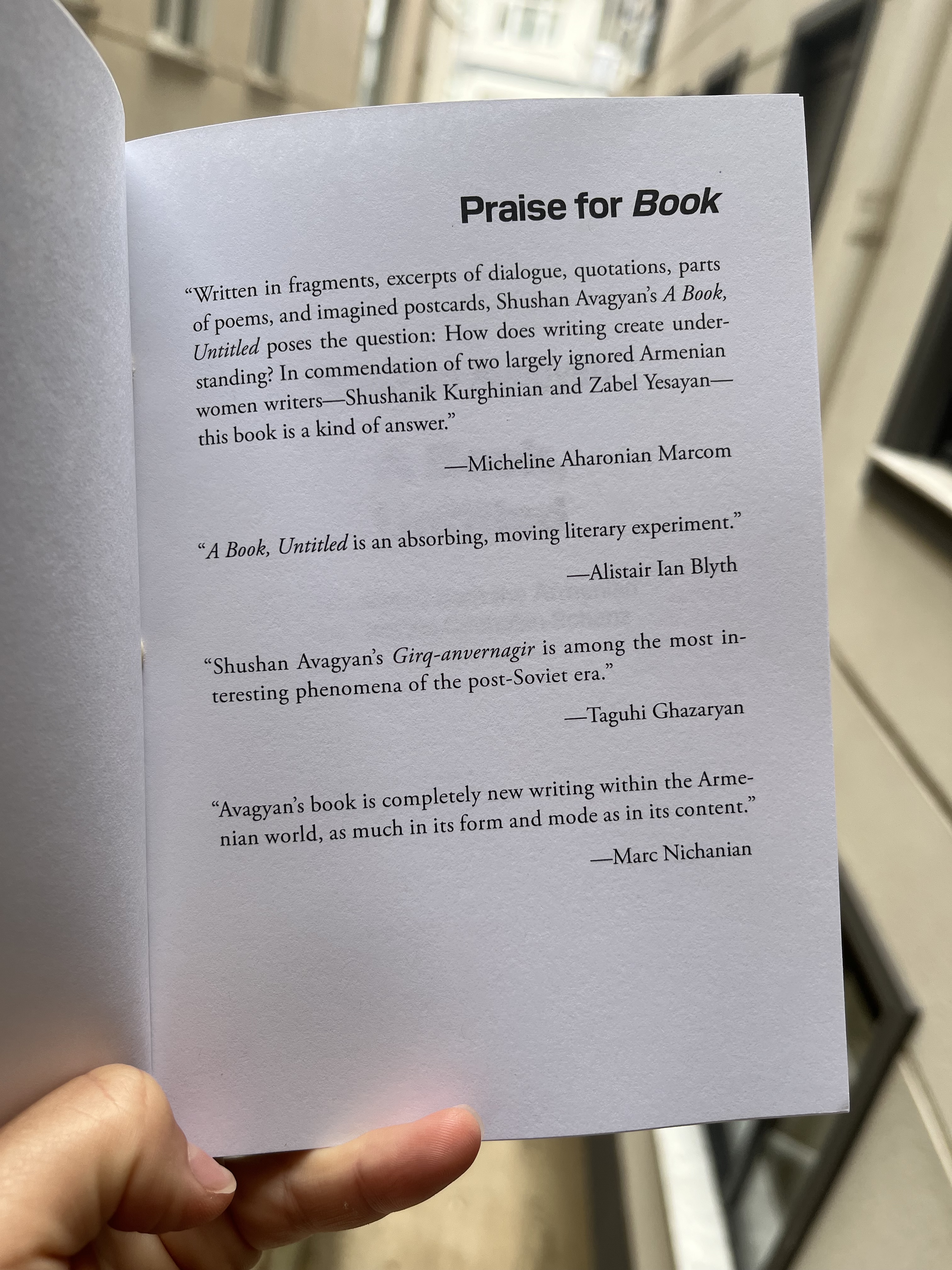
“A Book, Untitled is an absorbing, moving literary experiment.”
— Alistair Ian Blyth
“The English-speaking world already owes Shushan Avagyan a tremendous debt for her essential translations of the Russian Formalist Viktor Shklovsky. Now she has composed a brilliant novel of her own. A Book, Untitled is a powerful pastiche of voices and eras, as well as a feminist reclamation of Armenian women writers lost to time. For all its shifting, its purposeful resistance, its sharpness and darkness, I found this book simply delightful.”
— Martin Riker, author of The Guest Lecture
“Written in fragments, excerpts of dialogue, quotations, parts of poems, and imagined postcards, Shushan Avagyan’s A Book, Untitled poses the question: How does writing create understanding? In commendation of two largely ignored Armenian women writers—Shushanik Kurghinian and Zabel Yesayan—this book is a kind of answer.”
— Micheline Aharonian Marcom
“Avagyan’s book is completely new writing within the Armenian world, as much in its form and mode as in its content.”
— Marc Nichanian, author of Writers of Disaster: Armenian Literature in the Twentieth Century
 Deanna Cachoian-Schanz